The Evolution of Passport Readers in the Digital Era: A New Generation with ER Ultra-Slim PC-Free Design
2026-03-20The Evolution of Passport Readers in the Digital Era: A New Generation with ER Ultra-Slim PC-Free Design
In today's rapidly evolving digital landscape, identity verification has become a critical component across industries such as hospitality, travel, finance, and border control. As global mobility increases and regulations around security and compliance become stricter, traditional methods of manual data entry are no longer sufficient. This shift has driven the evolution of passport readers—from simple scanning tools to intelligent, integrated identity solutions.
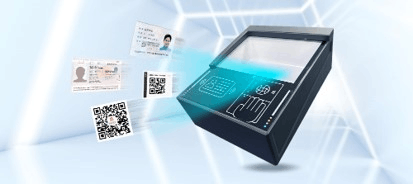
From Manual Input to Intelligent Automation
In the early stages, passport processing relied heavily on manual typing of traveler information, which was not only time-consuming but also prone to human error. With the introduction of OCR (Optical Character Recognition) technology, passport readers began to automate data extraction from MRZ (Machine Readable Zone) and visual zones. This significantly improved efficiency, reducing processing time from minutes to seconds.
Today, modern passport readers have evolved into multi-functional devices capable of recognizing passports, visas, ID cards, and other documents from over 200 countries. They can automatically extract and verify personal data, integrate with backend systems, and support various applications such as hotel check-in, airport e-gates, and visitor management systems. In fact, automated passport readers can be up to 100 times faster than manual data entry, allowing organizations to focus more on customer experience rather than administrative tasks.
The Rise of Self-Service and PC-Free Devices
As industries move toward self-service and contactless solutions, especially after the global digital transformation wave, there is an increasing demand for compact, standalone devices that do not rely on external computers. Traditional passport readers often require connection to a PC, limiting their flexibility in deployment and increasing system complexity.
This is where the ER Ultra-Slim PC-Free Passport Reader represents a significant leap forward.
Designed with a standalone architecture, the ER series eliminates the need for a connected PC, enabling direct integration into kiosks, mobile setups, and embedded systems. This aligns perfectly with the growing trend of self-service kiosks, unmanned reception systems, and smart terminals across hotels, airports, and government services.
Advanced Capabilities Beyond Traditional OCR
The new generation of ER passport readers is not just about reading text—it is about multi-source data acquisition and verification.
The device supports:
· OCR recognition of MRZ and VIZ data
· RFID reading of e-passport chips
· 1D and 2D barcode scanning (including QR codes)
· Multi-document recognition (passports, visas, ID cards, driver’s licenses, etc.)
With support for ICAO-compliant documents and the ability to process multiple document types, the ER reader ensures global compatibility and high accuracy. It can capture, extract, and verify identity data within seconds, achieving accuracy rates of up to 99.8%.
The inclusion of barcode and QR code recognition is particularly important in today’s digital ecosystem, where boarding passes, e-visas, and mobile credentials are increasingly used.
Solving Real-World Challenges
The ER Ultra-Slim PC-Free Passport Reader addresses several key challenges faced by businesses and institutions:
1. Reducing Manual Errors and Labor Costs
Manual data entry often leads to mistakes, especially in high-volume environments. Automated scanning eliminates human error and significantly reduces staff workload.
2. Enabling Faster Customer Processing
In hotels, airports, and telecom registration points, speed is essential. The ER reader enables instant data capture, improving service efficiency and reducing queues.
3. Supporting Self-Service and Unmanned Systems
With its PC-free design, the ER reader is ideal for integration into self-service kiosks, allowing users to complete identity verification independently.
4. Enhancing Security and Compliance
By combining OCR, RFID, and barcode verification, the device ensures accurate identity validation, helping organizations comply with KYC (Know Your Customer) and regulatory requirements.
5. Flexible Integration Across Industries
The ER reader can be integrated into various systems, including PMS (Property Management Systems), ERP platforms, mobile applications, and cloud-based services, enabling seamless digital workflows.
A Step Toward the Future of Identity Verification
As digital transformation accelerates, the demand for intelligent, compact, and autonomous identity solutions will continue to grow. The ER Ultra-Slim PC-Free Passport Reader reflects this trend by combining portability, performance, and integration capability in a single device.
It is not just an upgrade in hardware—it represents a shift toward a more efficient, automated, and connected identity ecosystem.
In the future, passport readers will play an even more critical role as the bridge between physical identity documents and digital systems. Solutions like the ER series are paving the way for smarter, faster, and more secure identity verification across the globe.